
Cupertino City Directory Collections
Cupertino has a useful historical shelf, but its limits matter. No verified standalone Cupertino Polk run, publisher, or actual local directory page was located in the research. No Polk years belong in a search result until a librarian confirms a specific volume. The most dependable Cupertino city directory material is a combination of local microfilm, digitized newspapers, maps, yearbooks, and broader regional collections. The table keeps verified runs separate from collections whose exact title or year span still needs a reference-desk check.
| Collection | Years | Where Held | Access |
|---|---|---|---|
| Cupertino-Monte Vista Courier | 1972-1976 | Cupertino Library | Microfilm, in-library |
| Cupertino Courier | 1978-1996 | Cupertino Library | Microfilm, in-library |
| Digitized local microfilm | 1972-2018 | SCCLD Digital ReeL | Full local run in-library |
| Fire-insurance maps | Years not listed | Cupertino Library local history | Ask the reference desk, in-library |
| Yearbooks | Titles and years not listed | Cupertino Library local history | In-library or catalog check |
| Ancestry Library Edition | Collection-specific | SCCLD branches | In-library only |
| HeritageQuest | Collection-specific | SCCLD | Cardholder access |
| Fold3 | Collection-specific | SCCLD | Library subscription |
| My China Roots | Collection-specific | SCCLD | Library resource |
| Federal census | 1790-1950 public; 1960 releases 2032 | NARA, Ancestry, HeritageQuest | 72-year rule |
The gap is not a reason to abandon a Cupertino city directory search. It is a reason to name the source precisely. Newspaper microfilm can supply society notes, obituaries, school honors, property notices, and address clues. A yearbook can connect a person to a school community. A map can show a street or tract that changed meaning. Broader San Jose and Santa Clara County volumes may hold Cupertino households under an older place label, so the absence of a verified city-specific volume should never be turned into an invented publication run.
Cupertino Directory Runs on Microfilm
The strongest local numerical trail is the newspaper record at Cupertino Library. The Cupertino-Monte Vista Courier microfilm covers 1972-1976, followed by the Cupertino Courier microfilm for 1978-1996. Digitized local microfilm extends the verified local run from 1972 through 2018, with the full Cupertino material available in the library. The home archive has a different scope, so a remote search should not be described as a complete online Cupertino city directory.
Search by surname first, then browse the issue image. Historic OCR can split columns, lose punctuation, and misread names. Search forms of a surname, a spouse name, a street, and a community label. The Courier is not a substitute for a formal deed or certificate, but it can place a household in a time and neighborhood before a later record is ordered.
The Cupertino Library local-history collection is the practical starting point for readers who need microfilm, maps, books, or yearbooks together.
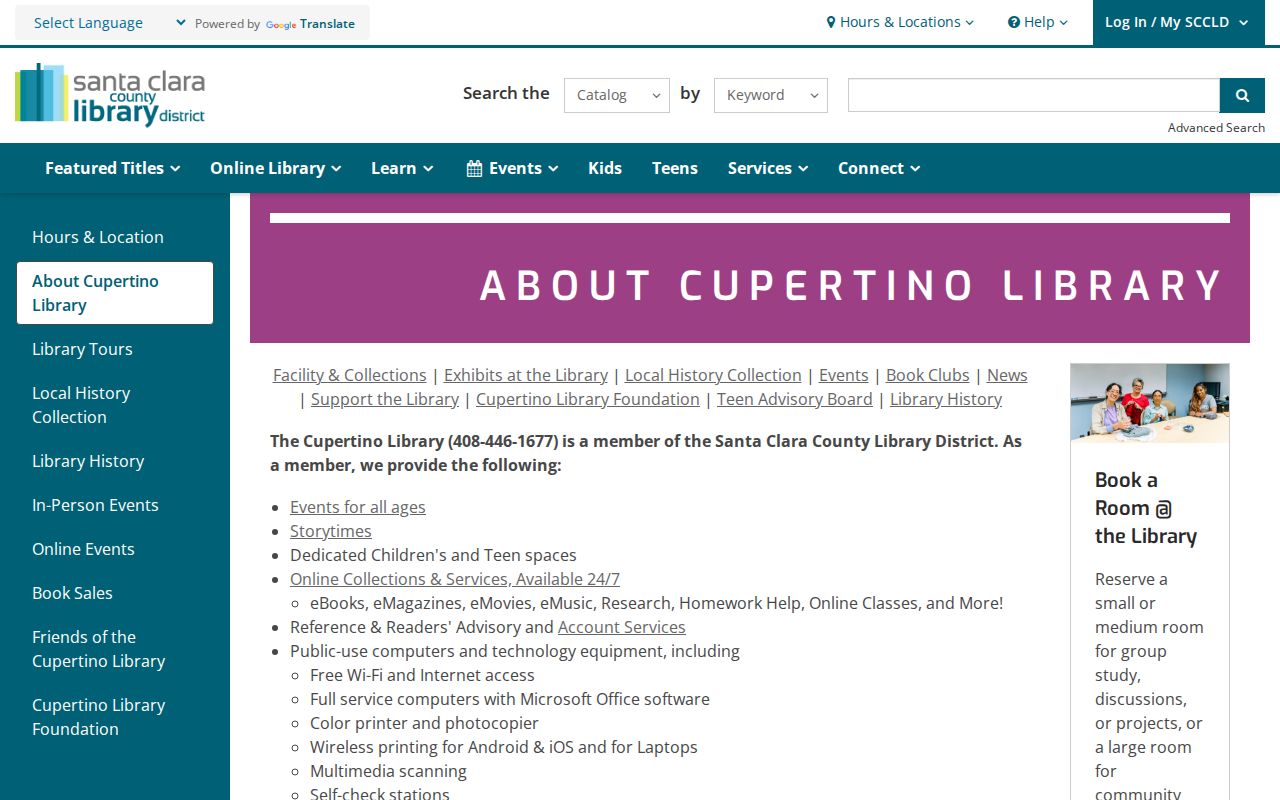
The local library image belongs beside the source trail: it points to a staffed research setting where the exact reel, catalog record, or yearbook title can be checked.
Cupertino Records Before City Limits
Older Cupertino city directory searches need a geography check before a name check. Cupertino was rural and unincorporated until 1955, then incorporated on October 10 after a September 27 vote. A record created before that change may use Santa Clara County, Monta Vista, West San Jose, or another township or community label. Later city limits do not control the index language of an earlier source.
Run the name with each likely label. Test Cupertino, Monta Vista, and West San Jose in newspaper text, directory headings, census geography, and library catalog notes. Keep the street name too. Stevens Creek Boulevard, De Anza Boulevard, Torre Avenue, and Saratoga-Sunnyvale Road or Highway 9 variants can appear differently across historical text. A changed label is a clue to investigate, not proof that two entries are the same household.
Legal parcel descriptions, subdivision names, tract and lot details, and a 1950 census household can bridge a place-name change more reliably than a modern mailing label.
Reading Cupertino City Directory Entries
A historical Cupertino city directory entry is a compact set of clues, not a modern identity record. Read every mark before drawing a conclusion. A surname may appear with a given name, an abbreviated spouse reference, a residence line, or a note that a person moved. Some marks describe the kind of entry rather than the person’s legal status. The exact key belongs to the volume, so copy it before interpreting shorthand.
| Name line | Surname and given name, with a spouse sometimes shown in parentheses. |
|---|---|
| Residence line | House number and street, with “r” sometimes meaning resides and “h” meaning householder. |
| Family clue | Widow notation or “removed to” language can explain a change between years. |
| Reverse clue | A street-order entry can connect a number to a named occupant. |
| Place label | Cupertino, Monta Vista, West San Jose, or a county heading may reflect the era. |
- Criss-cross directory
- A reverse section arranged by street and number instead of by surname. It is useful when an address is known first.
- Householder index
- An index centered on the primary household entry. It may omit other people who shared the address.
- Abbreviation key
- The volume’s explanation of short marks such as “r” or “h.” Photograph or transcribe it before reading entries.
- Index versus image
- An index is a pointer. The page image carries the surrounding notes, headings, and type that may change the meaning.
Cupertino Reverse Directory Clues
The reverse or criss-cross method starts with a street, not a surname. Turn to the street section, find the number in order, and record the named entry exactly as printed. Then turn back to the alphabetical section and test spelling variants. This method can reveal a household that is hard to find by name, but it only works when a relevant volume exists. No verified standalone Cupertino reverse run or publisher was found, so a reference librarian must confirm the actual shelf before a year is promised.
Use the method across adjacent years. A name that moves from one street number to another may reflect a real move, a changed number, or an OCR error. Compare the street line with fire-insurance maps, local newspaper notices, and the 1950 census. If the reverse section lists only a householder, do not treat that one line as a full list of everyone who lived there.
Reverse entries are most useful as a bridge between a family name and a stable address. A deed, assessor parcel, or court record still needs its own custodian and access rule.
Cupertino Library Directory Research
Cupertino Library provides the local access chain: microfilm, fire-insurance maps, local-history books and DVDs, yearbooks, and research help. The library phone listed for the local collection is 408-446-1677. Ask for the catalog record, exact reel, map edition, or yearbook title rather than assuming a familiar keyword describes the whole holding.
The library databases add different kinds of evidence. Ancestry Library Edition is branch-only. HeritageQuest is available to cardholders. Fold3 is a library subscription for military material. My China Roots includes Chinese census, immigration and exclusion, community directories, burial records, and lineage books. The SCCLD genealogy resources provide the library’s broader archive and partner-collection path. These sources can support a family history search, but each has its own collection coverage and should be cited by database and record set.
The SCCLD primary-source resources explain the library database path and help distinguish a local newspaper search from a broader genealogy collection.
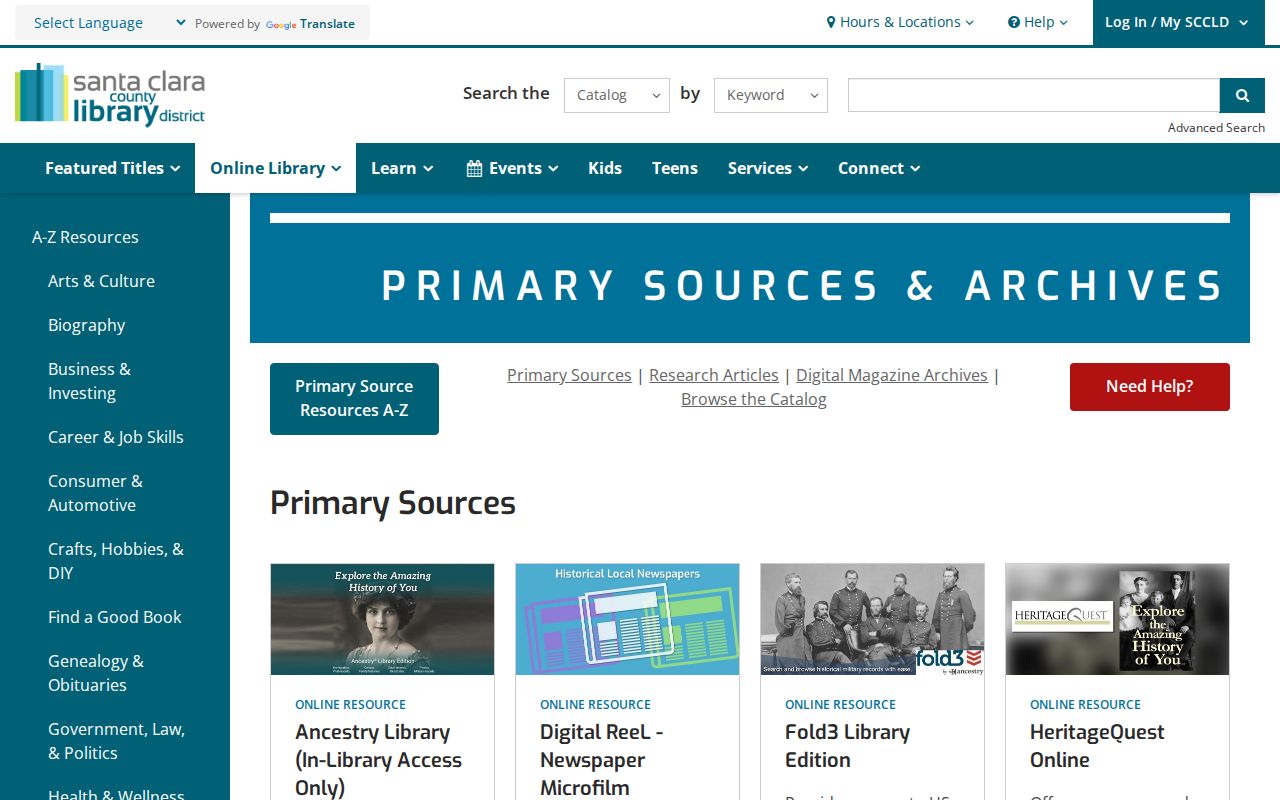
The database image reinforces the access rule: several strong resources are available through the library, not as unrestricted home searches.
Cupertino Census and Directory Pairing
Federal census records fill the long gaps between city directory years. The public federal census span reaches 1790-1950, while the 1960 census is scheduled for release in 2032 under the 72-year rule. HeritageQuest, Ancestry, and NARA access can place a household at a particular address or community label, but a census line is still a historical snapshot rather than proof of a later address.
Pair a directory entry with the nearest census year. Compare names in the household, ages, street or township wording, and nearby family names. A mismatch may reflect a move, an age estimate, a transcription error, or a place boundary. Newspapers and yearbooks can supply the missing year, while the local history shelf can explain why the same street appears under Monta Vista or another older label.
The National Archives at San Francisco extends the regional path for federal census, immigration, naturalization, and military material.
Using Cupertino City Directories for Family History
Family history work benefits from a fixed note sheet. Record the source title, year, page, place label, exact spelling, and every address clue. A missing name is not a final answer. The person may have moved, died, used another spelling, appeared in a broader regional volume, or simply been left out.
- Start with the alphabetical name section and copy the entry without correcting its spelling. Note any spouse reference, residence mark, widow notation, or “removed to” phrase.
- Repeat the search with surname variants, initials, maiden or married forms, and Cupertino, Monta Vista, and West San Jose headings.
- Turn to the reverse section when a street is known. Match the number, street spelling, and nearby entries, then compare the same address in the next available year.
- Pair the directory year with the closest public census, especially the 1950 census. Use the household list and geography to test whether the entry belongs to the same family.
- Close the historical trail with Courier notices, yearbooks, obituaries, probate references, maps, or a later official record. Keep a source gap visible when no copy route is verified.
When a historical candidate needs a modern identity check, move to the separate Cupertino resident lookup workflow instead of treating a directory line as current. Historical city directories are strongest when they show change over time and weakest when asked to prove a present-day fact.
Cupertino Orchard-to-Technology Records
Cupertino’s record trail follows its local story. The area developed from Ohlone homeland and Spanish and Mexican-era ranch landscape into orchard country, a postwar suburb, and a technology center. The official Cupertino history record helps explain why an old household may sit in a rural or tract context while a later entry sits in a dense business and school setting.
| Period | Record-keeping clue |
|---|---|
| 1912-1914 era | Early library accounts describe a store-based collection of roughly 50-75 books, followed by bookmobile service. |
| 1955 | Cupertino incorporated after a local vote, changing the municipal label used in later records. |
| 1960 and 1971 | A branch opened at Allario Shopping Center, then the Torre Avenue library opened in 1971. |
| 1974 | The library tested Lockheed’s Dialog computerized reference system, an early local shift toward digital research. |
That 1974 Dialog story is a useful local interest clue. Cupertino had an early connection to computerized reference work, yet the most useful people-history evidence can still be a reel, a map, or a yearbook read in person.
The Cupertino Historical Society and Museum adds artifacts on settlement, agriculture, education, home life, and business. Regional fallbacks include the California State Library’s city-directory collection and the San Jose Public Library California Room. Confirm exact volumes and shelf details before assigning a year or publisher. The official Cupertino history record supplies the local context.
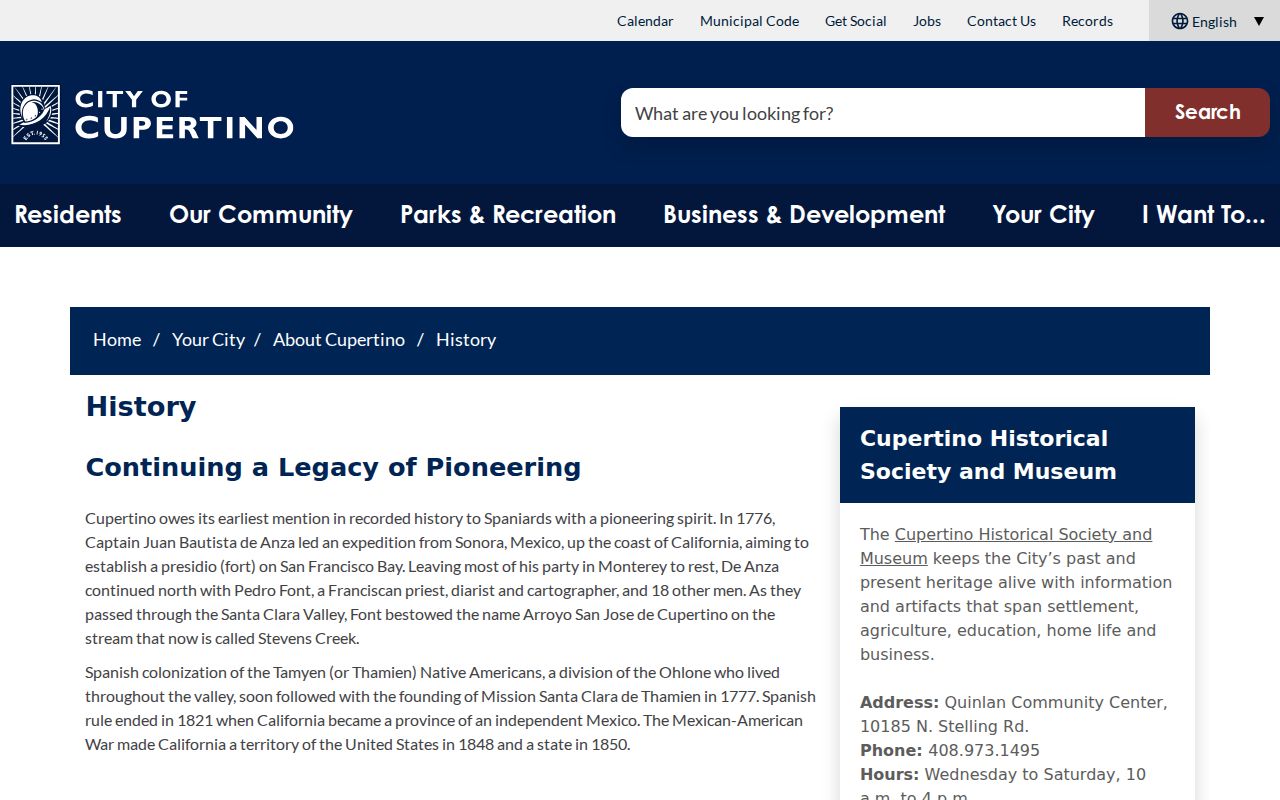
The official history image connects the directory search to the city’s changing labels and land use, rather than to an invented publication history.
The historical society’s collection provides a second local anchor for the same context.
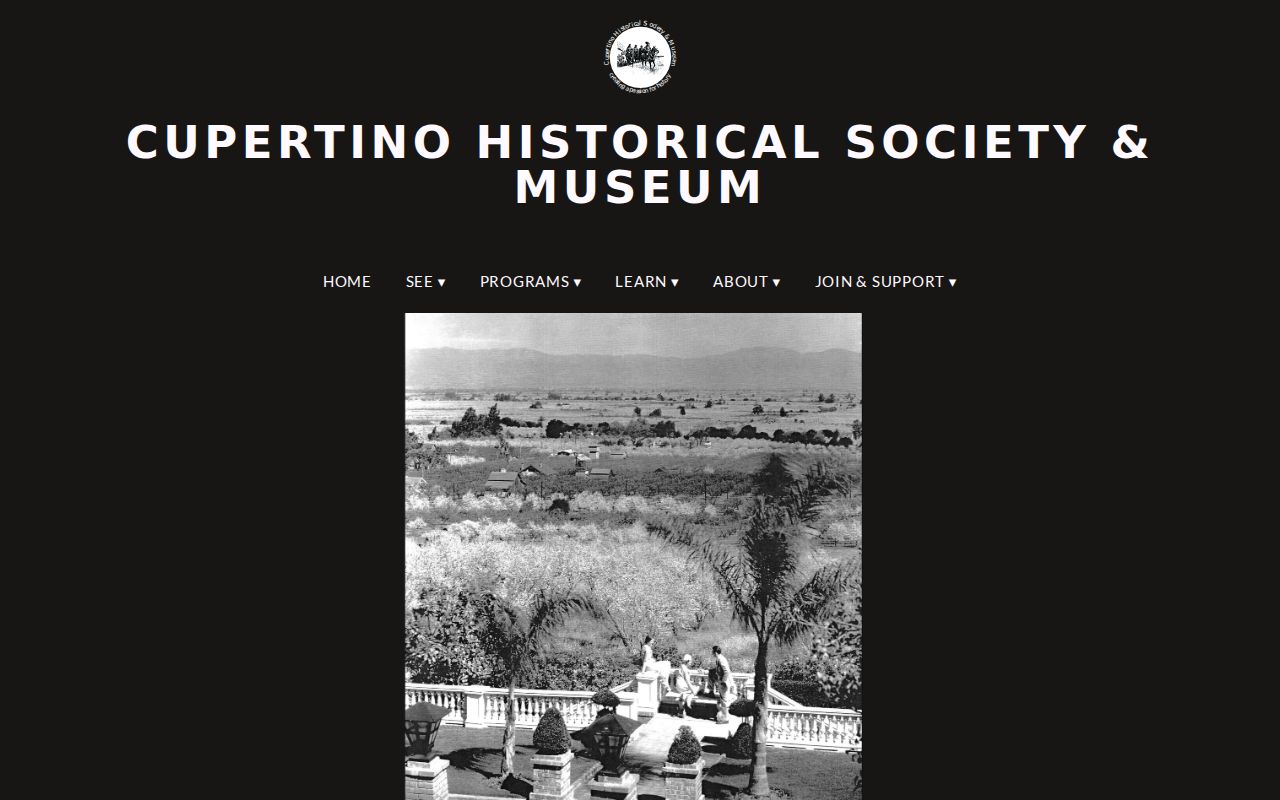
Artifacts and oral-history context can explain a place name or neighborhood story that a bare directory entry cannot.