
What a Cupertino Resident Lookup Can Confirm
A useful Cupertino resident lookup separates ownership, presence, historical association, and official case activity. The source chosen first should match the clue already in hand. An address can lead to an APN, a school connection can lead to a yearbook, and a known court category can narrow a party search. No row below proves a current home by itself.
| Record | What It Confirms | Where | Access |
|---|---|---|---|
| Property roll | Ownership, situs, and a possible mailing route | Santa Clara assessor and Cupertino map | Free address or APN search; owner access varies |
| Recorded deed index or image | Named parties, legal parcel, and return address when shown | County Clerk-Recorder | In person, with copy routes; records reach 1850 |
| Permit record | Project dates, address, and contacts tied to a filing | Cupertino permit search and Laserfiche | Free search; an account is not needed to search past records |
| Voter registration | A voter’s own status and district details | Santa Clara County self-lookup | Self-verification only; bulk data is restricted |
| Court index | Party name, case type, dates, status, and disposition | Santa Clara Superior Court | Public categories online; files often require the courthouse |
| Vital index or certificate | Relationship, birth, death, marriage, or dissolution event | County Clerk-Recorder, CDPH, and library indexes | Eligibility and fee vary by record |
| Business or license filing | Entity, agent, credential, or public affiliation | California SOS and DCA searches | Free public searches; not residence proof |
| Newspaper or yearbook | Historical association, school connection, or obituary clue | Cupertino Library resources | In-library or database access |
When an address is known, property and permit records usually provide the first neutral anchors. When only a name is known, court categories, library material, and vital indexes can narrow the field. A self-lookup tool is different from a public name search. A copy request is different from an index hit. Keeping those distinctions visible is the core of a reliable name search.
Two Anchors for a Cupertino Resident Lookup
Begin with two identity anchors, not a name alone. Useful pairs include a name plus approximate age, a middle initial plus a known street, a spouse or relative plus a date range, or a school plus a newspaper year. An APN, business name, court filing number, or obituary date can serve as the second anchor when an address is unavailable.
The practical path is name variant to independent date or place clue to custodian record. Search married and maiden forms, initials, spacing, hyphenation, transliteration, and likely OCR errors. Cupertino’s substantial Asian and immigrant communities make name order and romanization especially important, but a cultural or ethnic assumption never identifies a person. Use a date, parcel, family link, school, or filing number instead.
A human-use search might reconnect a classmate through Cupertino yearbooks, trace a deceased relative through an obituary and probate file, or document a family move across directory years. Each use begins with a narrow question and ends with the source office’s rules.
- Anchor the name to a known address, APN, school, relative, business, or date. If the clue is an address, use the assessor or city map first and keep ownership separate from occupancy.
- Run the Santa Clara Superior Court party search with spelling variants, the right case category, and a date range. Treat a same-name hit as unconfirmed until another identifier aligns.
- Compare the candidate with a vital index, obituary, yearbook, permit, business filing, or directory entry that shares a place, date, family link, or filing number.
- Order an authorized or informational copy from the custodian only when the record type and eligibility fit the request. Send corrections to the office that created the record.
Search Cupertino Court Cases by Party
The Santa Clara Superior Court portal supports civil, small claims, probate, some family, traffic or local-ordinance, and criminal case categories. It is not one statewide party index. Search mode changes by case type, so select the category before treating an empty result as meaningful.
| Case number | Exact case identifier when it is already known. |
|---|---|
| Case title | Caption or title search for the public case record. |
| Party name | Name search with role and spelling variants where the module permits them. |
| Filed date | Date range for when the case entered the court index. |
| Disposed date | Date range for a recorded disposition, when available. |
| Case status | Open, closed, or other status options supplied by the module. |
| Category within case type | Narrows civil, criminal, probate, family, traffic, or other category choices. |
| Criminal case-number route | Defendant name plus date of birth, or defendant name plus filing month and year. |
The Santa Clara Superior Court Case Information Portal is the starting point for the public index. Online criminal filings begin in 2004 and the court notes quarterly updates. Criminal cases tied to Cupertino are assigned to the Palo Alto Courthouse at 270 Grant Avenue, Palo Alto. Older criminal name searches require clerk assistance, and the court says public microfiche is no longer provided. Adoption, juvenile, sealed, and confidential parentage records are excluded.
The court search image shows why a case type and date range matter before a name is judged. A no-result screen does not establish that no record exists.
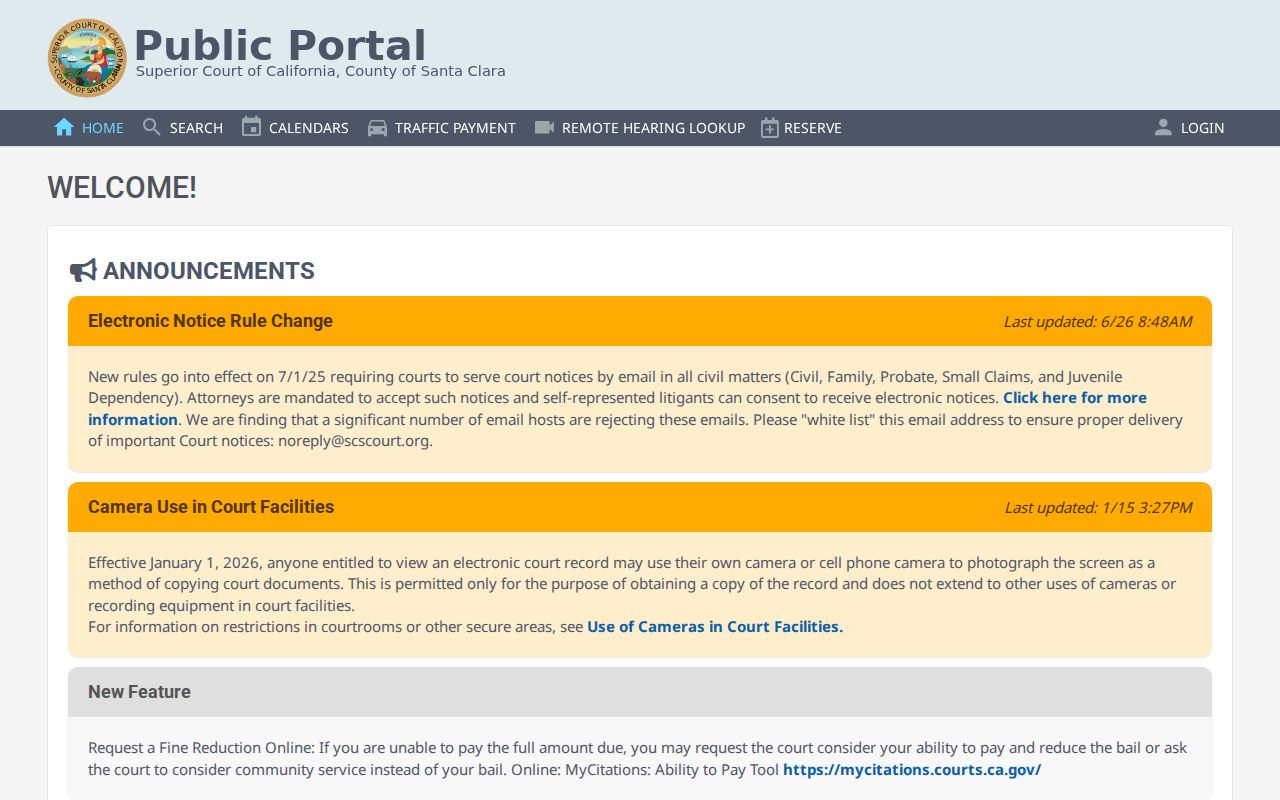
The portal image belongs with the field list because it represents an index route, not an automatic copy of the court file.
Cupertino Docket Results and Copy Routes
A docket is the court’s running record of a case’s filings, events, and status. A public search result can confirm that a case exists without making every document downloadable. Read the result inventory first, then ask the court for a copy through the route tied to the filing.
- Case number, title, type, and category identify the docket.
- Parties and roles show who is listed in the public index.
- Filing date, status, disposition, and register of actions show the case timeline.
- Scheduled hearings may appear when the event is public and current.
- Pleadings are generally not downloadable from the index.
For a copy request, provide the case number, full party names, document title, and filing date. Request the document at the courthouse where it was filed, in person or by mail. A mailed request should include a self-addressed stamped envelope and a check payable to the Superior Court; a “not to exceed” amount may be written. The researched copy fee is $0.50 per page, staff research beyond ten minutes adds a fee, and certification costs extra.
- Docket
- The court’s running index of a case’s filings, events, parties, and status.
- Index versus image
- The index points to a record. The filed image or paper may require a courthouse visit, mail request, copy fee, or certification fee.
- Certified copy
- A copy marked by the custodian as an official duplicate. Certification is separate from seeing a free case index.
Federal case records follow a separate federal process outside the county portal. A criminal index entry before 2004 is a clerk-assisted search, not a reason to substitute an unrelated public name result.
The court’s criminal-record instructions explain the cutoff and the limits on what the public can receive.
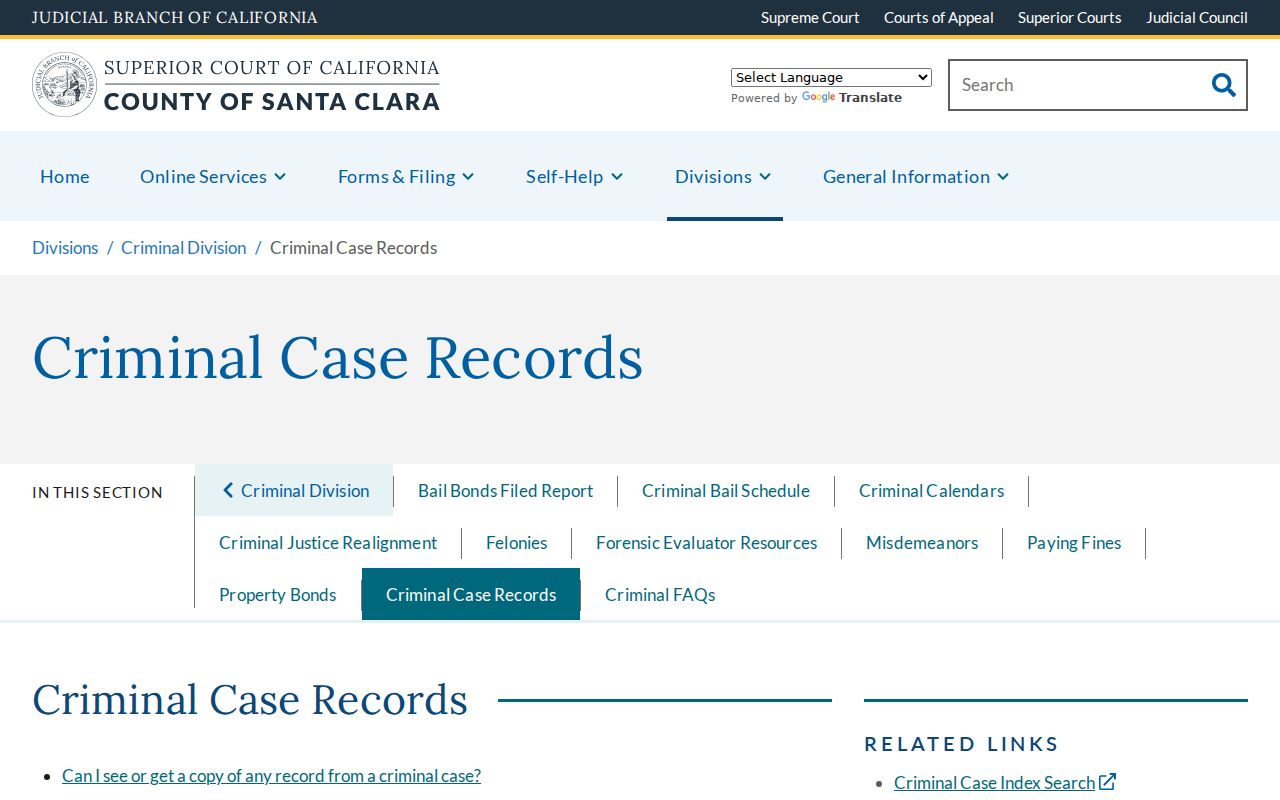
The criminal-record image reinforces the copy boundary: an index pointer and a filed paper are separate access steps.
Same-Name Controls in a Cupertino Resident Lookup
Same-name control means refusing to merge two records until an independent fact aligns. Compare a birth or approximate age, date range, street or APN, spouse or relative, school, case role, or filing number. A matching surname alone is a lead. A matching date and parcel is stronger, but the custodian’s scope still decides what the record proves.
Run variants one at a time and save the search terms. Test maiden and married forms, initials, alternate given-name order, transliterations, and OCR errors. Watch for a registered-agent address, a business mailing address, or a professional license address that belongs to an office rather than a home. Correct a wrong conclusion with the originating custodian, not by repeating it in another index.
Control point. Ask whether the date, parcel, family link, or filing number matches before treating a Cupertino result as the same person.
Verifying Cupertino Property Records
The Santa Clara assessor interface searches a physical situs address or APN. Simple address search uses the property address. Advanced search uses street number, direction, street name, street type, unit, and city. APN search accepts formats such as 12345678 or 123-45-678, and the terms checkbox must be accepted before Search. The county interface showed no public owner-name tab.
Use the free Santa Clara County Real Property Search to capture the APN, situs, recent title-changing document number, property type, assessed values, assessment year, and available map links. If the online result lacks a needed name, the assessment roll or counter and Cupertino’s map are the documented alternatives. The county Property Explorer can add zoning, land use, development, flood, fire, sanitation, watershed, and other planning layers. Cupertino’s Property Information Map separately advertises an owner-name route.
Ownership is not occupancy. A mailing address is where tax correspondence goes; a situs address is the parcel location. Neither creates a household-member list. Follow the latest transfer document to the Clerk-Recorder when a named party must be checked, and keep the legal description with the APN because a person can convey more than one parcel.
Cupertino Business Filings Can Mislead Resident Lookup
Business and license records can confirm an affiliation, but they are frequent false positives in a name search. California Secretary of State bizfile searches by name or file number. Advanced controls can narrow entity type or group, status, initial filing date, and public-company disclosure mode. Results are capped at 500 closest matches unless the search is narrowed, while the system offers more than 17 million free filing PDFs.
- SOS results can show entity name and number, formation or registration date, status, jurisdiction, street or mailing address, agent name and address, and Statement of Information due date.
- County fictitious-business-name filings can connect a business name, owner names, and business address, but only some business names require that filing.
- DCA search can show a board, license number, status, issue or expiry information, and discipline links where supplied.
- Cupertino business licensing runs through HdL at 408-329-9654 and Cupertino@hdlgov.com; a city request can seek an existing record.
Use the California Secretary of State business search and the California Department of Consumer Affairs license search to test an affiliation, then stop short of calling an agent, office, or campus a residence.
Obituaries, Probate, and Cupertino Heirs
A deceased-person search is one of the clearest human uses for a Cupertino resident lookup. Start with Cupertino Courier or Cupertino-Monte Vista Courier notices, then compare a death index, public probate docket, and the deed trail. An obituary can supply relatives, a former address, a school, or a date that makes a same-name court result testable.
Probate petitions may identify heirs and connect a household to a later transfer, but access and redactions govern the file. A deed succession can show named parties without describing every family relationship. Pair the probate case with the legal parcel, newspaper date, and any yearbook or directory clue. If a historical name needs more context, the Cupertino city directory collections provide the library and regional shelf path.
Keep an obituary clue separate from a current-address claim. The record may describe a past residence, a relative’s home, or a service location rather than the deceased person’s last home.
Cupertino Vital Records and Adoption Boundaries
California distinguishes an authorized certified copy from a certified informational copy under Health and Safety Code sections 103525-103526. Authorized birth and death copies are limited to the registrant, specified family members, legal representatives, law enforcement or government in official business, and people entitled by court order. Others can generally request an informational copy marked as not valid to establish identity. Confidential marriage copies are limited to the parties or court-authorized requesters under Family Code section 509.
County Clerk-Recorder counter, mail, and approved online channels cover county records. CDPH provides statewide copies. Effective in 2026, the researched state fees are $31 for birth, $26 for death, $19 for marriage, and $18 for dissolution. The fee is a search fee and is retained if no record is found. CDPH accepts a check or money order payable to CDPH Vital Records, not cash.
The VS 111 birth application has a detailed field inventory.
- Copy type and number of copies.
- Registrant name, sex, date and place of birth, and parents’ names including birth surnames.
- Applicant name, address, phone, email, relationship, statutory eligibility category, and purpose.
- Signature and date, plus a sworn statement and notary certificate for a mailed authorized-copy request.
Mail the form to CDPH Vital Records, MS 5103, P.O. Box 997410, Sacramento, CA 95899-7410. Processing time is maintained separately, so no fixed turnaround belongs in a promise.
Adoption and birth-parent research follows official CDSS or CDPH court-authorized adoption-record and mutual-consent mechanisms. Sealed original birth and adoption records are not open name indexes. A court-authorized route or mutual-consent program is different from searching a public resident lookup.
The California birth-copy rules explain the authorized and informational distinction.
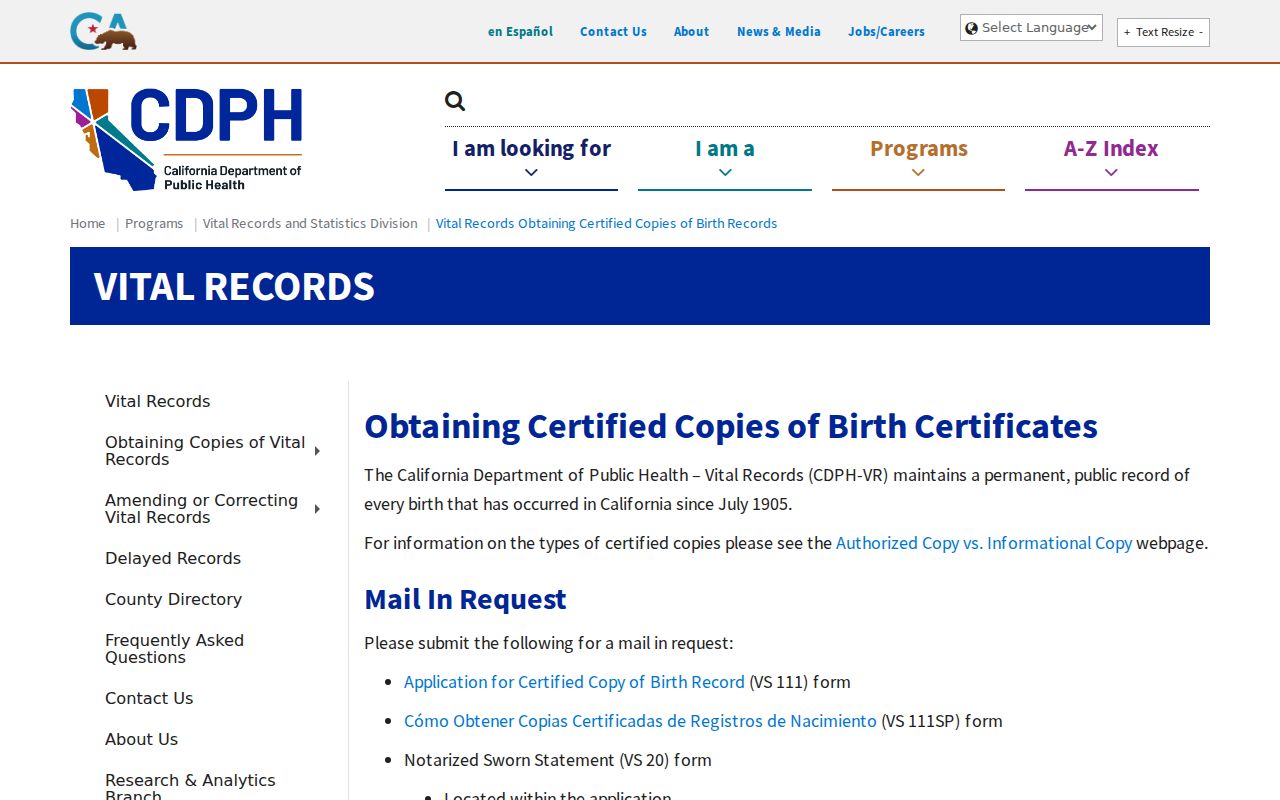
The vital-record image belongs with the form inventory because the application path, not a name hit alone, controls what can be released.
Limits on a Cupertino Resident Lookup
Santa Clara County’s voter verification tool is for a voter to verify their own registration. It asks for first name, last name, birthdate, and either a driver license or state ID route or the last four Social Security digits when requested. The Go action returns minimal registration information. It does not display names to public users and cannot search another person by name, street, or ZIP.
- Residence address, telephone, email, and precinct information are confidential from the general public for at least 100 years under Elections Code sections 2194 and 2194.1.
- Signature, Social Security number, and driver-license or state-ID number are never released.
- Approved election, scholarly, journalistic, political, and governmental requesters may seek specified voter-file data with a purpose, wet signature, fee, and request form.
A signed file request and fee must arrive before fulfillment. The Registrar lists Candidate Services at 408-299-8639, the Voter Registration Division at 408-299-8683, and an office at 1555 Berger Drive, Building 2, San Jose.
When a needed existing record is not online, the California Public Records Act is the fallback. A request can go by email, counter, or online portal and should state the date range, subject, specific description, and contact information. The agency generally has ten calendar days to determine disclosure, with a limited 14-day extension for unusual circumstances. Production follows promptly and reasonably, not automatically within ten days. Direct-copy costs may apply, and the request itself is public.
The Cupertino records request channels cover city-created records. A request seeks an identifiable existing record; it does not require an office to create a new list or answer an open-ended question. The city may withhold active investigative material, privileged advice, drafts, or information made confidential elsewhere, while segregable portions should be released.
Privacy tools also shape the result. Safe at Home gives qualifying survivors and specified threatened people a substitute mailing address and publication protections. The California Consumer Privacy Act provides covered commercial-data rights, subject to public-record exceptions. The DROP program allows one deletion request to more than 500 registered data brokers beginning in 2026, with broker deletion processing beginning August 1, 2026; it does not erase deeds or other custodian records. Corrections belong with the office that created the record.
Lawful personal use. A Cupertino resident lookup belongs to personal, lawful research. Do not use record details to stalk, threaten, harass, or intimidate anyone; California stalking law can carry criminal and civil consequences.